The Academic Prize 2025

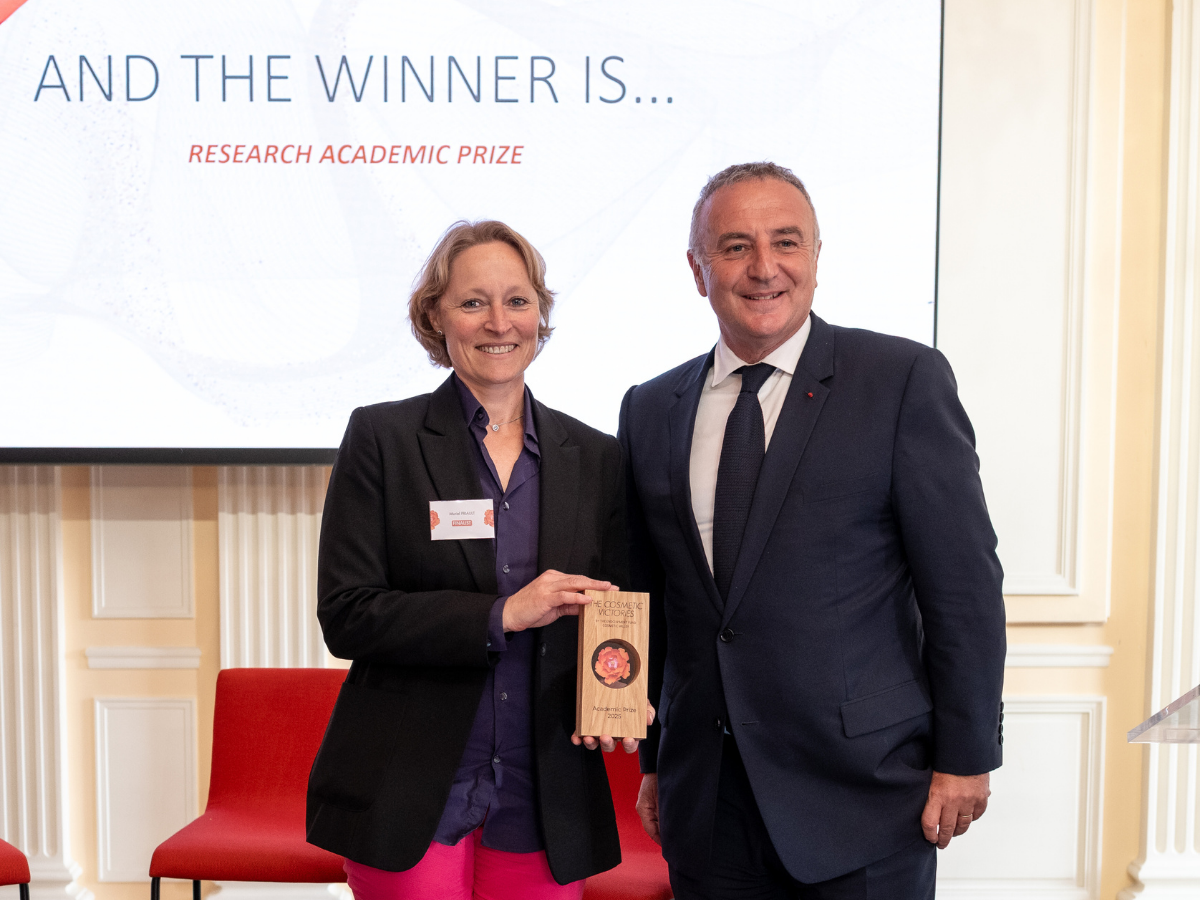
Muriel PRIAULT

IBGC - CNRS, Bordeaux (FRANCE)


Natural protein instability as ageing biomarker
The CNRS team is exploring an innovative approach towards measuring the impact of the exposome on skin ageing. Specialists in spontaneous degradation of proteins due to chemical reactions that alter their structure and function, the researchers wish to demonstrate that this phenomenon could serve as a precise indicator in assessing the environmental effects on skin. Identifying specific proteins like new ageing biomarkers could open the way to improved prevention and appropriate cosmetic solutions.

The Academic Prize 2024

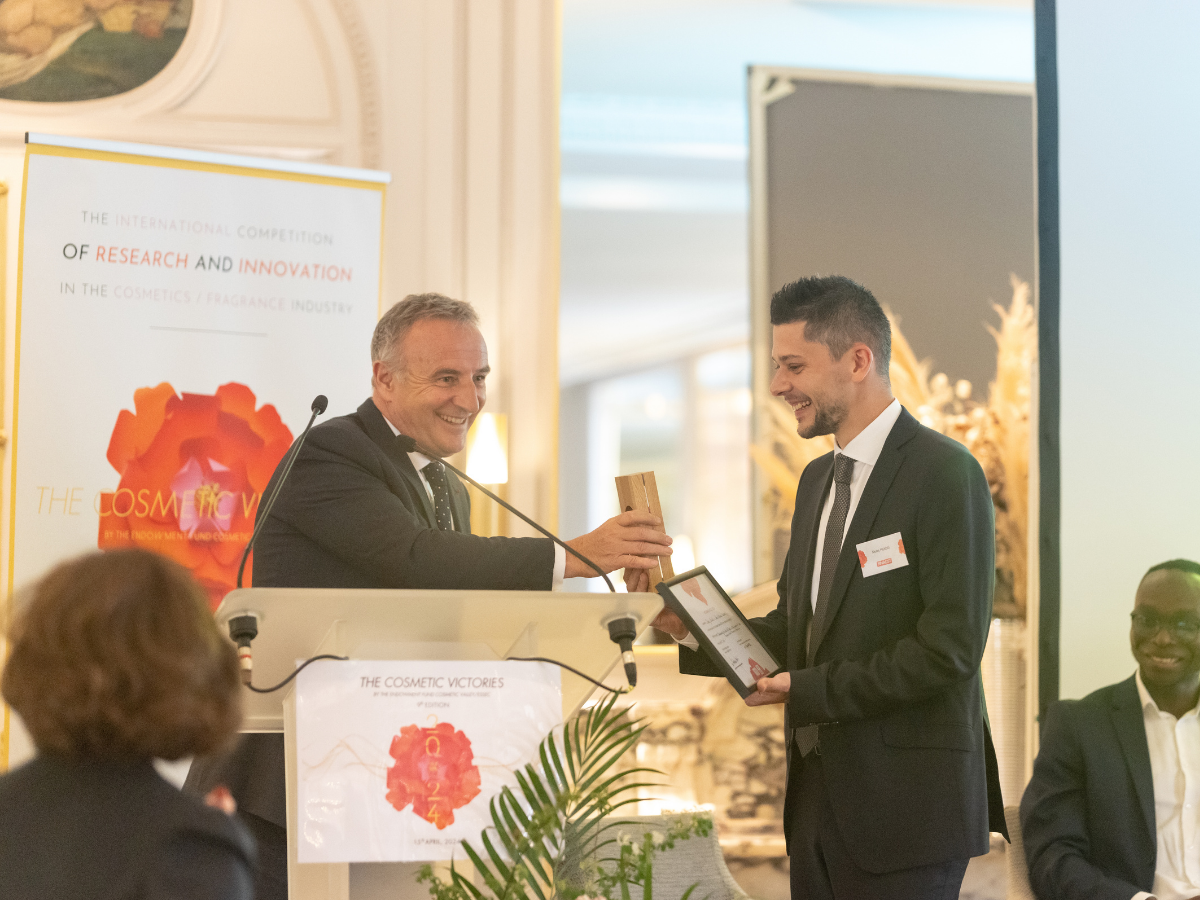
Matej HLADIS

Université de Côte d'Azur (FRANCE)


Deciphering the Code of Scent: a Bio-Inspired AI for Accurate Odor Perception Prediction:
This innovative project uses knowledge of odor coding, the biological mechanism by which our brains interpret smells, to develop a bio-inspired AI capable of accurately predicting odor perception. Grounded in fundamental biology, our pipeline can incorporate genetic information, enabling the creation of personalized scents. By opening the way for the modeling of complex mixtures, we aspire to create a tool that empowers its users to craft innovative fragrances, while also providing alternatives to raw materials to reduce their ecological impact.

The Academic Prize 2023

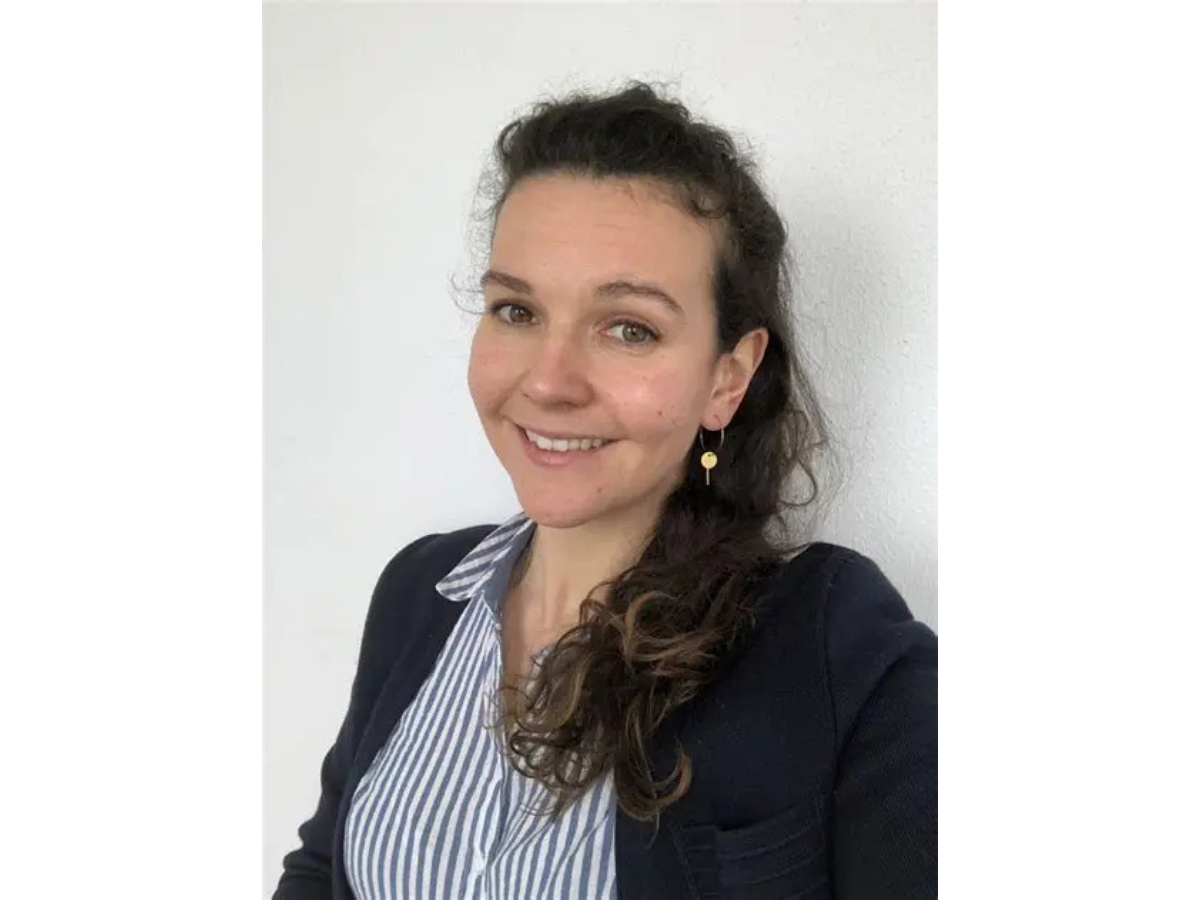
Ophélie PIERRE

Université de Bretagne Occidentale (FRANCE)


Model Of reiNnervaTed Human Skin 
The project involves the final validation of a model of skin reconstructed by sensory neurones. These are obtained from human samples, thereby doing away with using animals. An irritated or sensitive skin can be simulated using this unique model. This research work will be used to develop new, more appropriate ingredients and new care products, especially for atopic skins.

The Academic Prize 2022

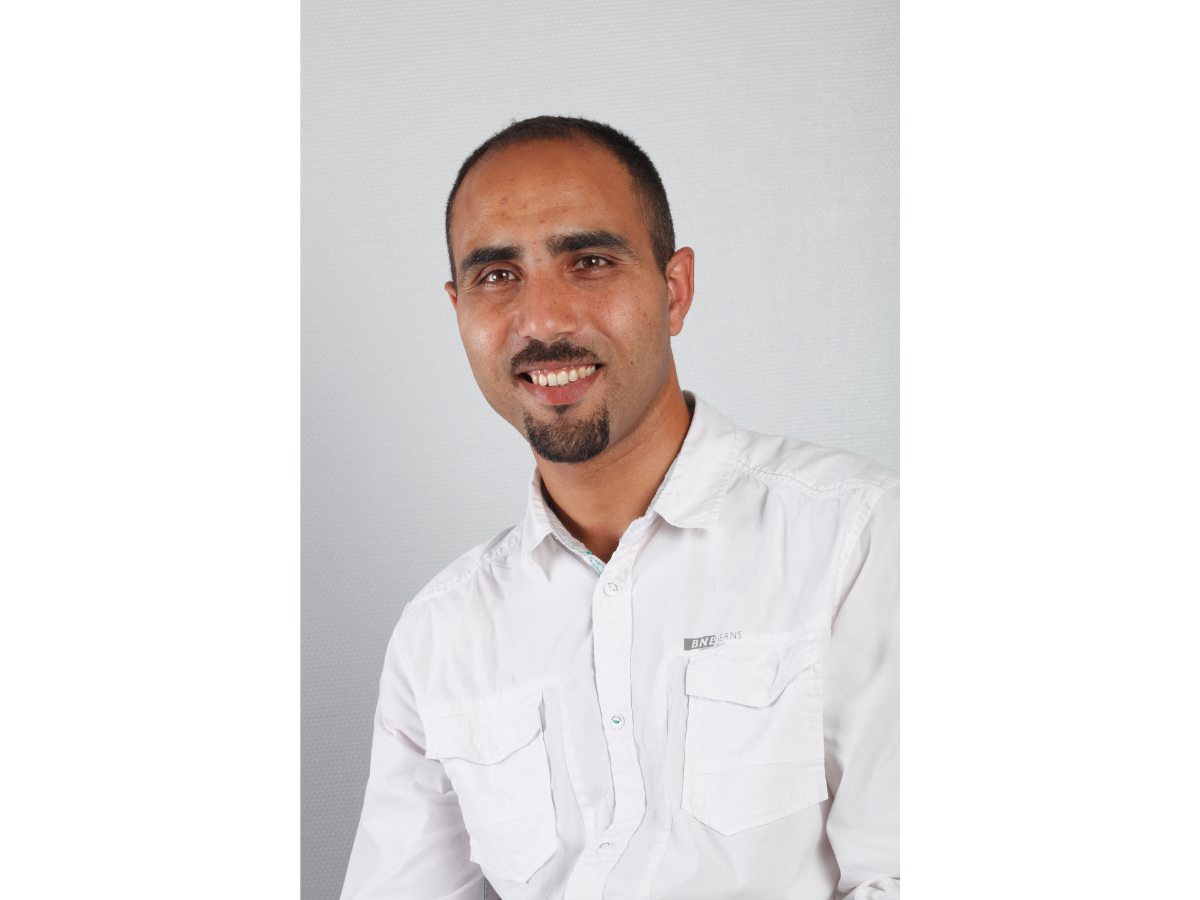
Sami HALILA

CNRS Researcher in Glychochemistry - Centre de Recherches sur les Macromolécules Végétales – CNRS, Grenoble (France)


Carbogel A Simple and Eco-Friendly Carbohydrate-Based Gelling Agent for Oily Phase 
The project relates on the supramolecular gelation of organic liquids, such as organic solvents or oils, with monosaccharide derivatives that self-assemble into hierarchical 3D network of nanostructures. The sweet gelators are made from an eco-friendly and efficient method (reaction in water). Gelation could be performed by sonication, or by heating/cooling, or by dilution. The gel is considered as a stimuli-responsive and controlled delivery matrix for cosmetic agents. Finally, our project contributes to "green" and sustainable cosmetics by limiting our environmental and social impact.

The Academic Prize 2021

Laurent BILLON
Institut des Sciences Analytiques et de Physico-Chimie pour l'Environnement et les Matériaux – Université de Pau et Pays de l'Adour UPPA

Bio-inspired Microgels for Cosmetics … and what else?
IPREM works on a new generation of bio-inspired microgels with amazing properties, opening the door to applications for cosmetics and health. "Microgels are tiny sponges containing up to 95% water, with swelling/shrinking abilities under stimuli effect," explains Laurent Billon. This unique ability can be used to encapsulate/release active ingredients and the water evaporation at the skin surface forms an adhesive, elastic and mechano-electrical film, which is used to gradually diffuse a cosmetic active ingredient.

The Academic Prize 2020

Michel GRISEL

Professor- Le Havre University, Normandy

(FRANCE)


Non biological Skin Model
This non-biological surface has been developed to mimic skin surface properties with the aim to fulfil both the topological and surface physicochemical properties of human skin surface. The present synthetic skin model was validated through comparison with in vivo and ex vivo skin measurements. It is suitable to evaluate raw materials or cosmetic properties such as spreading, impact on skin wettability, residual film properties, etc… with great accuracy, low cost, easy and fast measurements.

The Academic Prize 2019

Kie NAKASHIMA
Ph.D., Specially Appointed Researcher – Laboratory of Advanced Cosmetic Science, Graduate School of Pharmaceutical Science, Osaka University, (JAPAN)

Next-Generation Antiperspirants
Traditional plug-type antiperspirants lose effectiveness as sweat easily removes them from the sweat pores. Therefore, antiperspirants that act directly on the sweat transport mechanism are highly desirable.
This project introduces an innovative live imaging system for sweat glands, enabling visualization of the dynamic sweating process. We believe this system offers a promising approach for developing targeted sweat-regulation strategies, including the identification of pharmacological candidates for functional antiperspirants.

The Academic Prize 2018

Vincent GAUTHIER

SATIE Lab’, University of Cergy-Pontoise

(FRANCE)


Toward connected skin: a challenge for the future.
The project aims to instrument living skin explants with several sensors to retrieve both its mechanical and dielectric properties.
Such a biosensor allows following the impact of the environment surrounding the skin – pollution, sun exposure, product
application; and how interactions between both can modify the latter. This can be used to objectify skin condition but also to
develop a new tool for sensory analysis, with the assessment of physicochemical modifications implied by skin/material
interactions. This is fundamental for marketing, well-being, and by extent, public health purposes. Finally, robotics and
biomechanical prosthesis could benefit from the project: reproducing pressure and proprioception sensation is possible but
smoothness feeling, for example, is still obscure.


The Academic Prize 2017

Eric ROBERT
Research Director at CNRS (FRANCE)


Development of a compact, autonomous, and reliable plasma-based device for anti-aging skin treatments.
Plasma JETS (France)
Plasma technologies are currently experiencing rapid development in the field of biomedical applications. This innovative project aims to position plasma in a new market: cosmetic skincare.
The goal is to determine the beneficial effects of plasma on skin anti-aging concerns (wrinkles, pigmentation, oxygenation, hydration, tissue elasticity, etc.) in order to develop a new device suitable for use in salons or at home. The compact and reliable device will allow studies on in vitro and ex vivo samples, as well as on human subjects. The innovation also aims to integrate control tools to deliver a precise dose of plasma, independently of the user, through real-time adjustment of the plasma generator parameters.
The work is conducted in collaboration with a skin specialist team and Thermo Fisher Scientific, co-inventor of the plasma source patent.