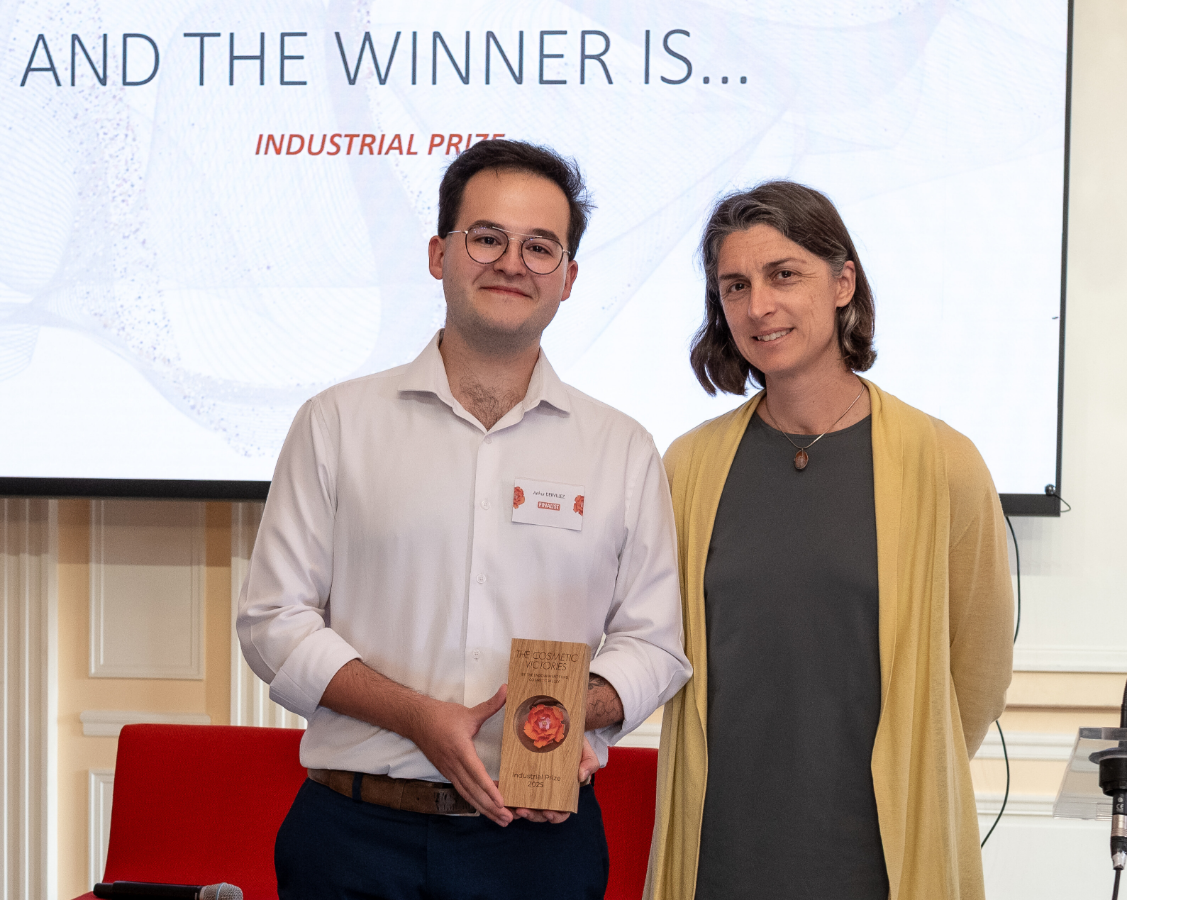
The Industrial Prize 2025

Arthur Dervillez  Loretta 

(FRANCE)


Creation of a nanometric Digital Skin Twin by AFM and AI
Their project aims to create a Digital Skin Twin based on the skin's nanotexture, by combining high-speed AFM and AI for ultra-precise analysis. Sponsored by a partnership between a company, a university and international dermatologists, a diverse panel of samples can be exploited. The goal is to link the skin's nanometric characteristics to its chemical composition to revolutionise worldwide dermatological and cosmetic studies.

The Industrial Prize 2024

Prateek MAHALWAR

BIOWEG (GERMANY)


Revolutionizing The Future Of Bio-Ingredients With The Power Of Microbes & Green Chemistry
MicBeads100 is a bacterial cellulose-derived functional micropowder replacing solid microplastics like PMMA in cosmetics & personal care products – the bio-alternative medium to large companies in the FMCG sector are seeking for. Consciously produced by upcycling agri and food waste and applying green chemistry, our innovative and sustainable ingredient brings value by fully biodegrading within 60 days, surpassing synthetic polymers in performance and complying with new EU regulations on microplastics.

The Industrial Prize 2023

Maximilian WEBERS

Colipi (GERMANY)


Carbon-Light Alternative to Palm Oil 
The start-up has opted to work with the fastest-growing micro-organism on Earth and for which CO2 is the only carbon source.  This innovation converts the carbon dioxide in the air into biomass, thereby producing a vegetable oil with very similar properties to palm oil, whose cosmetic properties are highly acclaimed. It not only provides a technical substitution for palm oil but also a decarbonisation solution for industry.

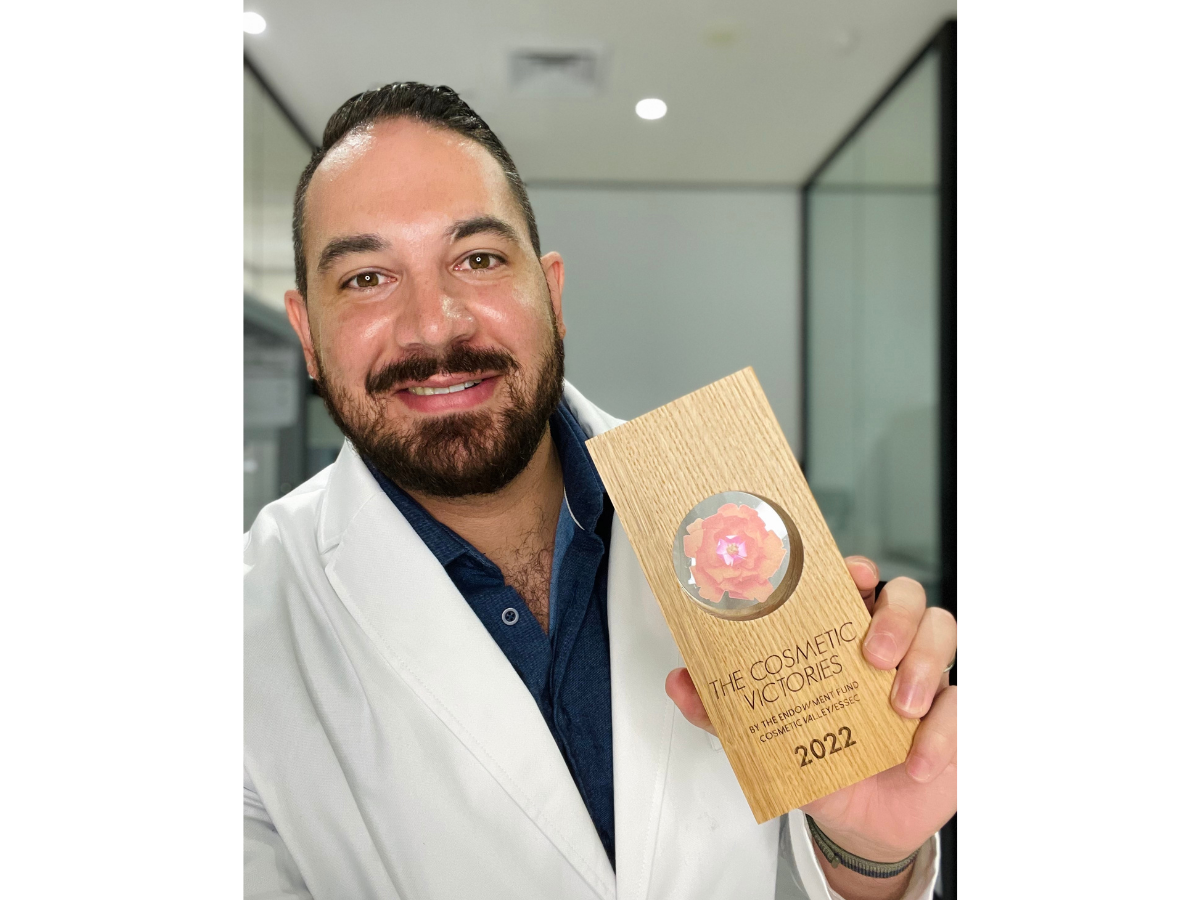
The Industrial Prize 2022

Stefan MAZY

CEO Founder - Derma Health Solutions Pty Ltd (AUSTRALIA)


SkinRNA Micro-cell Test 
A world-first, repeatable, epigenetic diagnostic skin patch and laboratory test that quantifies skincare effectiveness via real-time gene expression activity. Our device collects more than 15,000 genes, while our algorithms provide gene expression activity scores for skin functions including collagen and elastin production, and skin inflammation. After product intervention, a second test is performed measuring new gene activity against initial benchmarks. Consumers can then repeat testing at intervals to track and monitor skin improvement at a genetic level without waiting for visible signs.